
Wednesday, December 21, 2022
Tuesday, December 20, 2022
Unity Is a Command
Elsewhere I have tried to show that unity within the fellowship is the major theme of Philippians. Paul sees disunity as a sin that destroys the church's witness and renders it impotent. I find it interesting and instructive that Paul's second missionary journey -- during which the Philippian church was founded by Paul -- was itself born out of heartbreaking division. The great partnership of Paul and Barnabas had come to an unhappy end. Of course, God used it for good, as he always does. But it is surely no wonder that a church in which Paul saw major divisions should have concerned him.
Notice something else. During Paul's second journey he sought and received the guidance of God in the form of a vision. However, Paul takes no direct action on his own. He submits the vision to his team, and only when unanimity has been reached do they set out for Europe. Paul's cautious reaction to the divine vision suggests to me a sensitivity to unity and cooperation that perhaps was missing at the beginning of the trip.
Unity is not really a choice but a command. Just read Phil. 1:27-30. And the extent to which we obey probably says more about us and our Christianity than anything else.
Monday, December 19, 2022
No Stay Do Bad Kine Stuff!
I love Greek. Has anyone noticed? I absolutely love this language! Notice what John does in 1 John 3 when describing the believer's relationship with sin:
- In verse 6 he says that the believer "does not sin."
- In verse 9a he says the believer "does not do sin."
- And in verse 9b he says the believer "is not able to sin."
In each of these places, the Greek tense implies continuous or habitual action. This is brought out very nicely in the ESV:
keeps on sinning
will continue to sin
cannot go on sinning
Contrast this with the CSB's:
does not sin
does not sin
is not able to sin
However, the idea is one of making a practice of sinning. That's because the new birth involves a radical transformation of life. Thus, in John's theology at least, for a Christian to "go on sinning" would indicate he's never been born again. This is, in fact, what verse 10 clearly says: "Anyone who does not practice what it right is not a child of God."
No, John is not teaching sinless perfection. No, he is not saying that the Christian is impeccable. Instead, "the Christian's supernatural birth from God keeps him from habitual sin" (Stott, 133).
Now do you see why the ESV's rendering is so much more helpful than the CSB's? It's the same difference in Spanish between "no peca" and "no practica el pecado." In French we would say, "ne pratique pas le péché."
Of course, my favorite is the Hawaiian Pidgin Bible: "no stay do bad kine stuff"!
Getting the Cart Before the Horse
Just back from the Y.

While lifting I listened to a lecture by Jordan Peterson on postmodernism, specifically where postmodernism gets it wrong. Postmodernism teaches that there is an infinite number of interpretations. This may be true, says Peterson. But there isn't an infinite number of viable interpretations. There is only a finite number of viable interpretations. Having taught hermeneutics for many years, I agree wholeheartedly with that observation.
As for those who would have us read the New Testament through their own ethnic lense, using, say, an "African" hermeneutic or an "Asian" hermeneutic or a Latinamente hermeneutic, Peterson points out something that is simply profound. In fact, I can think of no other modern thinker who elucidates this point as clearly as he does. And just what is that notion?
There are more differences within the groups than between the groups.
My thoughts exactly. Let's say we want to pursue an "African" hermeneutic. Well, if you think about this logically, you would have to conclude that this is an utter impossibility because there are an infinite number of potential interpretations. There is absolutely nothing monolithic about "African" anything. And just whose African hermeneutic do you want to use? That's an important question, especially in light of the fact that there are over 1.2 billion people living on the African continent today, all of whom I suppose could be considered "African" in one sense of the term.
Let's take it a step further. If I have counted correctly, there are currently 54 nations in Africa. Which of these nations do you have in mind when you are speaking of an "African" hermeneutic? Libya? Zimbabwe? Congo? Egypt? All of them? Most of them? East Africa? West Africa? Now let's take just one of those 54 nations for a minute. I'll use Ethiopia as an example because this is where my wife was from and I've been there 17 times. I am told that within Ethiopia there exist some 90 major people groups, each with their own language and culture. My wife and I had the good fortune of working among a number of them, including the Amhara, the Oromo, the Hadiya, the Alaba, and the Burji. These peoples speak, respectively, Amarinya, Orominya, Hadinya, Alabinya, and Burjinya. Keep in mind I am only talking about linguistic subcultures. I've said nothing about religion, even though in any of these people groups you are likely to find Evangelicals, Muslims, and Orthodox, three groups that have very little in common with each other in terms of their worldview. Add politics (local and national) into the equation, and the situation in Ethiopia becomes even more incredibly complicated.
In the end, I do agree that we all read Scripture through our own cultural lenses. But I see this fact more of a corrective than anything else. This is not to say that culture is not important in studying the Scriptures. But in a grammatical-historical approach to the Bible (the method I teach), we are primarily seeking to understand what the author meant to his original readers in light of first-century culture, not our own. To place my own lenses at the beginning of the hermeneutical process instead of at the end (applicational phase) of the process is, in my opinion, not helpful. It is to put the cart before the horse.
Sunday, December 18, 2022
Chiefs Beat Texans!
Mahomes and the entire KC team played great today.
36/41.
336 yards.
2 TDs.
1 rushing TD.
Chiefs clinch the AFC West.
Awesome!

Saturday, December 17, 2022
Creation: The Amazing and Awe-Inspiring Work of His Hands
How's your Saturday going? Mine's been fantastic. Here's what I had for lunch today -- homemade soup with homemade bread, courtesy of my daughter. Thank you!

I am finally fully healed up after a week-long head cold. Which meant ... drum roll please ... that I could get back to the gym today for an upper body workout. Probably the easiest workout of my life but I was out there and happy as all get out.

Earlier still I spent time in 1 John. In chapters 1-2, John has been dealing with a delicate subject: the sinning Christian. In 2:1, he tells us that the whole purpose of his writing this letter is to keep his readers from sinning. The full forgiveness of the believer's sins through the blood of Christ (1:9) should not allow him to think lightly of them. The Christian is not to sin, and yet sinning is inevitable, is it not? And it is these two concepts that John is trying to balance here. Christians can either become too lenient or too severe toward sin. Being too lenient encourages sinning because we can always "1 John 1:9 it," right? On the other hand, we can be guilty of the other extreme, which either denies the possibility of a Christian sinning or else refuses him forgiveness when he does.
In 1 John 2:15-16, John seems to give us a summary of what he considers, let's say, to be the essential marks of a sinful life. He mentions "the lust of the flesh," "the lust of the eyes," and "the boastful pride of life." The first describes sins that result from our fallen, sinful nature. These sins derive from within. The second indicates sins that assault us from the outside -- from what our eyes find pleasing or attractive. An obvious example is David's desire for Bathsheba. But is that all? Could this temptation also be an inordinate attraction to things that are truly good and beautiful? Robert Law, in his commentary on 1 John called The Tests of Life, thought so and spoke of "the love of beauty divorced from the love of goodness." As I have discussed elsewhere, there's a very fine line between appreciating nature and inordinately loving it (Enjoying Nature Without Worshipping It). Could John here be implicitly issuing a warning against the love of nature? In my own life I think it's too easy to enjoy nature almost to the point of allowing God's creation to become a substitute for him in my affections. It becomes one of the "gods" I spoke about yesterday. The key, I think, is to approach all encounters with creation mindfully and prayerfully. "Thank you, God, for this beauty," I often say when I'm outdoors on a run or a hike. I say this because it's so easy to go outdoors and not experience God's presence at all. We take his creation for granted.
If for no other reason, we need to spend time outdoors for the opportunity to worship the Creator while enjoying his creation. Try that today. Take a stroll through creation's art gallery and praise the Artist as you go. Worship only him, but do not feel guilty because you are blown away by the work of his hands.
Friday, December 16, 2022
Keep Yourselves from Idols (1 John 5:21)
A big part of farming is, of course, checking up on your flocks and herds and making sure they are safe, as I did this evening.

I thought about that when I came to the final verse of the book of 1 John. In one sense, it seems very much out of place. I mean, the letter is all about eternal life based on the finished work of Christ, and that we can know that we know God if we keep his commands, and that we are to love our sisters and brothers and keep believing in Jesus, etc. I'd expect at least a fond "grace and peace to you" or "greet everyone for me," but instead we find:
Little children, keep yourselves from idols.
That's it.
Period.
End of letter.
At first, it didn't make sense to me. But notice this: John has just talked about how Jesus Christ is "the true God and eternal life," and that we may perceive and know him experientially. The charge "Keep yourselves from idols" seems, then, to follow quite naturally. Knowledge of, and communion with, the one true God is completely incompatible with any and all God-substitutes, be they actual physical idols or any untrue mental image we might have of God. "Dear children," writes Eugene Peterson in The Message, "be on guard against all clever facsimiles." Similarly the Latin Vulgate reads, "Filioli, custodite vos a simulacris." I even like how my Hawaiian Pidgin Bible renders the verse: "Eh you guys! You jalike my own kids! So, stay away from da idol kine gods." But surely the Oscar goes to The Living Bible:
Dear children, keep away from anything that might take God's place in your hearts.
Touché.
But what does this have to do with farming? The verb that John uses here for "keep" is not tēreō (as in verse 18) but phulassō -- the verb that's used of the shepherds who were guarding their flock by night when Jesus was born (Luke 2:8). Believe me, farmers can never grow lax in this duty. There is too much at stake. Likewise, the book of 1 John is a reminder that until the Lord's promised return we must wage a constant battle against worldly desires (1 John 2:15). We can lust for popularity. We can lust for money. We can lust for automobiles. As Augustine once said, the City of God is often overpowered by the call of the City of Man.
Stop it, says John. Don't go there. Today, as always, we are not to replace the one true God with our little "gods." We are not to entangle ourselves with the affairs of this world if we are to please our Commander-in-Chief. Jesus isn't merely item number 1 on the program. He is the program. And that's what John seems to be emphasizing as he concludes his letter.
Jesus Christ is God. He has the first word and the last word and every word in-between. What matters is stewardship, and it is required of servants that they be found faithful, not only until death but unto death if necessary.
A Truly Christmas Epistle
For the holidays I'm doing a deep dive into the little letter of 1 John.

This book is all about the incarnate Jesus Christ, his unique divine-human person, and how he forms the foundation of our Christian lives. These are very appropriate themes to explore during Christmas.
Anyone Can
Who else can vividly remember the satisfaction of the moment when you realized that it doesn't take a super smart person to learn how to read New Testament Greek?
Brock Purdy: Soli Deo Gloria
Watch Brock Purdy of the Niners give God the glory in the TNF postgame interview. Bless you, sir.
Yes, You Can Learn a Foreign Language
The reason is that we are language learning machines. We all know at least one language fluently. From that point it comes down to competence and hard work. Some will be better at language learning than others. But in the end, it's those who work hardest who will end up being the best.
Thursday, December 15, 2022
What Do Christians Know? The Text of 1 John 2:20
In 1 John 2:20, did John write "You all know" or "You know all things"? Read my take here.

My Hugest Goal for 2023?
I have to be honest. This video thrilled me to the core.
My hugest, biggest, most daunting and ginormous goal for 2023? Climb the Allalinhorn. This will involve massive training and staying healthy and injury free. I suppose there is a part of me that feels like conquering another peak in Switzerland somehow defines me as a person. Of course, it doesn't. In my heart of hearts I know that's true, but there is another part of me that needs constantly to be challenged. For me, attempting to climb another Alp is symbolic of hard work, determination, and doing what I said I would do. People say there are better, cheaper, and safer ways of pushing one's boundaries. True. But I'm still glad I'm going to try. The challenge of getting there is hugely motivating in part because of the summit itself and in part because of what it takes to get there. For me, it's all about the challenge to achieve something that's just beyond reach. So why not? I may even organize another Becky Black Memorial Fund to Fight Endometrial Cancer. Now wouldn't that be fun?
Wednesday, December 14, 2022
Paul the "Seed Picker"
Today my devotions were in Acts 17, where Luke is describing Paul's encounter with the philosophers of Athens. In verse 18, they ask an interesting question. Here's how the NASB renders it:
What would this idle babbler wish to say?
Compare this with Phillips' rendering:
What is this cock-sparrow trying to say?
Are you as confused as I am?
I've mentioned this again and again, but we English speakers are incredibly blessed to have such a variety of translations and paraphrases of Scripture. I rarely study a passage of Scripture without comparing these versions. This includes reading languages other than English.
So what is behind the expression "idle babbler" -- or "cock-sparrow"? The CSB reads "ignorant show-off." Its predecessor (the HCSB) has "pseudo-intellect." Young's Literal Translation has "seed picker."

How about this one?
Was will eigentlich dieser sonderbare Vogel mit seinen aufgepickten Weisheiten?
Here the Neue Genfer Bibel nicely captures the imagery of the Greek word spermologos. In English, this reads:
What does this strange bird actually want with the wisdom it has picked up?
The idea is of a person who randomly collects bits of information from others and then passes them on frivolously like a gossiper. BDAG even uses the gloss "scrapmonger." Thus, Paul is apparently being accused of being an impertinent show off, passing on ideas he's picked up here and there as though they were his own. This is why so many translations (in both English and French) use the word "charlatan" in rendering spermologos. That said, I think I'll go with the CSB here: "ignorant show-off." Either that or the DAV's "self-promoting grandstander" (Dave's Authorized Version).* Either way, this is obviously rather severe language!
Isn't Bible study a blast?
*The Cambridge English Dictionary defines "grandstander" as "someone who acts or speaks in a way that is intended to attract attention and impress people watching."
Going Deeper with the Scriptures
For their final exam, my students had to translate selected verses from 1 John 1:5-2:14. We could only go so deep in class, so now's the time to chew on every word. For example, let's take one part of 1 John 2:1:
If anyone sins, we have an advocate with the Father, Jesus Christ, one who is righteous.
Note a couple of details:
1. "If anyone." John didn't specify new Christian versus old Christian or educated Christian versus uneducated Christian, etc. Anyone!
2. John says, "If anyone sins." He didn't say sin in word or deed, or sin in attitude or action, or whether it's a sin of omission or commission. He just said "sins"!
3. "We have an advocate with the Father," that is, someone who pleads on our behalf. Where is he? In the intimate presence of (pros) the Father. Who is he? He is "Jesus" (his human name), and because he is a man, in him we have a Great High Priest who is not able not to sympathize with us! He is also "Christ," emphasizing his kingly authority and power to accomplish whatever he desires. Finally, he is "one who is righteous." He doesn't need an advocate of his own!
Here's your teaching outline:
- The breath of the promise.
- The scope of the sin.
- The greatness of the provision.
There is no limit to the amount of detail an observant reader of Scripture can uncover. And we can practice these skills on any type of biblical material -- a verse, a paragraph, a section, or even an entire book.
There's probably no tool of exegesis more powerful than observation. You must not only learn how to read Greek, you must learn what to look for.

Happy hunting!
The Most Exciting Part of Your Day
The most neglected area in the lives of most "defeated" Christians is probably Bible reading. This should be the most exciting part of the day and it can be when you realize that it's GOD'S word we're reading. If you want to end up a theologian or a biblical scholar, that's great. Study it that way, but I'll let you in on a little secret. Some of the godliest and most knowledgeable Christians I know have had no formal biblical education.
There is a world of difference in just reading the Scriptures and letting them come alive in your life.
HalleluYah!
A friend of mine who teaches in Israel sent me an email recently that contained a familiar word with a slightly different spelling:
HalleluYah!
Love it! I plan to write it this way from now on.

On "the" Ministry
"Ministry" in the New Testament means all of God's people exercising their spiritual priesthood every day of the week wherever they are -- in their jobs, in formal and informal associations with other people, and in all contacts of daily life. The elevation of the pastorate into "the" ministry utterly fails to acknowledge the fact that every Christian is to be a minister to everyone else. I repented of referring to "the" ministry years ago and invite you to join me. If we would take this biblical principle to heart, the focus of so many of our churches -- pastors performing while others watch -- would be radically altered.
Believer: You are a minister. Fulfill your ministry!
Tuesday, December 13, 2022
On Bible Reading
Too many biblical scholars spend too much time fussing over which English translations are the best when the people who need their help the most aren't reading their Bibles at all.
Trendy Christianity
It has never been more important to reject a Christian faith that is superficial or a merely sociological type. The Christian faith is grounded in the historicity and divinity of Christ and the mission of the church he founded. It's time to reject the headlong rush of the church to embrace secular causes and to incorporate into the church the latest fads of secular research such as standpoint epistemology.
Monday, December 12, 2022
The Gospels As Historically Accurate Documents
It's interesting to see how painters have depicted the room in which Lincoln died. As time goes by, it seems that more and more people are squeezed into the scene. Here's Alonzo Chapel's "The Last Hours of Lincoln." A grand total of 47 people have been shoehorned into the tiny room.

In artistic terms, this is called embellishment. In the movie The Great Escape, which tells the story of allied airmen who escaped from a German POW camp during WWII, a number of American pilots are included in the escape. Of course, not a single American flyer participated. But no American audience is going to be all that interested in a bunch of Brits, so the producers included men like Steve McQueen and James Garner.

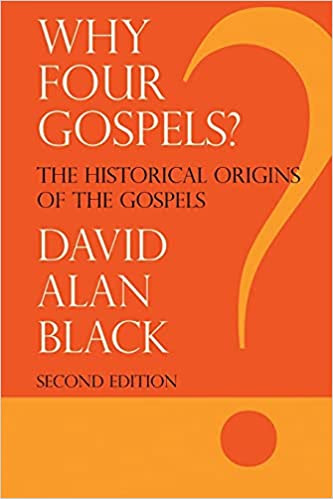
I remember when it was popular among scholars to apply "redaction criticism" to the New Testament. Scholars asserted that the Gospel writers not only arranged and organized the materials in their Gospels but also created material out of whole cloth. To get back to the "real" Jesus, we supposedly have to strip away all of these accretions. Thankfully, I don't see that kind of radical redaction criticism too much these days. There is no need for us to ever think that the Gospel writers embellished their accounts. Thus, while the four Gospels are not "biographies" (bioi) in the strict sense of the word, they most certainly are biographical and historically accurate and trustworthy down to the smallest detail. That my students may come to see this is exactly my prayer for the second edition of Why Four Gospels? There is life-giving power in the Bible precisely because it leads us directly and truthfully to the One who is the way, the truth, and the life.
Sunday, December 11, 2022
Repeated Bible Reading
The Bible is unlike any other book you've ever read. For example, recently I've been reading this book by Neil Cole. Neil was a Greek student of mine years ago when I lived in Southern California.

It's the second time I've read it. I feel that if I've read a book on, say, church leadership two or three times, I've basically got its message. It will sit on my shelf for years and I will probably never read it again. That is never true of the Bible. You can read it over and over again and its message will never become old to you. You'll see things you've never seen before.
Are you convinced of the value of repeated Bible reading? Something to think about as we enter a new year.
Saturday, December 10, 2022
The Destiny of Your Life
Sir Christopher Wren was a British architect who lived in the eighteenth century. He lies buried at Saint Paul's Cathedral, the great edifice that was designed by his own genius. On his tombstone is written this simple inscription:
If you seek his monument, look around.

A man is known by his works. The question is: What have you done with your life? Have you been faithful to the call of God in your life? What one thing has God called you to do with your life? Believe me, the enemy doesn't want you to discover it. He wants you to go about living your life on your own.
Student, your entire life is ahead of you. Don't just drift through the empty motions of Churchianity. Find something that grips you and reaches deep within. I urge you to pause long enough to ask yourself, "Am I doing only a good thing with my life but not the right thing?" Then submit yourself, first and foremost, to Christ and his cross.
The condition of your heart will determine the destiny of your life.
Friday, December 9, 2022
Who Needs Cardio?
Who needs cardio when you can just watch the Bucs play the Saints or the Rams play the Raiders?



Thursday, December 8, 2022
Going from English to Greek
There are at least two things that Paul did in Acts 17 that teachers of ancient Greek can emulate. He started where his listeners were, and he used what was familiar to introduce what was unfamiliar. "So you've got an 'Unknown God'? Well, he's not only knowable, he's available. Let me tell you about him."

Can we do this with Greek? Absolutely. Move from the known to the unknown, from "This is how it works in English" to "This is how it works in Greek." "I teach" is the active voice in English. "I am being taught" is the passive voice in English. "I'm shaving" is the middle voice in English (note that the word "myself" is assumed in English, as it is in Greek).
By the way, just because your students may have had courses in English in high school, don't assume that they will automatically understand grammatical concepts. It's been truly said that we don't understand how our own language works until we study a foreign language. That's when concepts like tense and voice begin to make sense.
In other words: If you study Greek, you will also learn English. That's two languages for the price of one!
Join the Gym!
Another challenging workout at the Y this morning.
This holiday season invest in yourself and your health with a gym membership. There you will learn to incorporate healthy habits into your daily routine and overcome the challenges that come with getting older. You owe it to your grandkids.
Wednesday, December 7, 2022
Day of Infamy
My father was born on Oahu in 1918. In November of 1941, he was inducted into the U.S. Army. Two weeks later, he witnessed the Japanese attack on Pearl Harbor, which occurred 81 years ago today. I was born on Oahu eleven years after Pearl Harbor, but you can't grow up in Hawaii and not feel like Pearl Harbor is part of your DNA. December 7, 1941 was our 9-11.

The attack should never have happened. Oahu was the strongest military fortress in the world. U.S. intelligence simply could not conceive of the type of attack the Japanese actually launched -- an airstrike aimed at destroying the U.S. Pacific Fleet, with no intention of planting one Japanese boot on Hawaiian soil. Yet that's exactly what happened.
How does one account for the fact that we were caught napping on a balmy Sunday morning 81 years ago? Who was to blame? As Gordon Prange noted in his definitive treatment of the attack -- At Dawn We Slept -- "Pearl Harbor resulted from a vast combination of interrelated, complicated, and strange historical facts: on the one hand, bountiful human errors of great variety, false assumptions, fallacious views, a vast storehouse of intelligence badly handled; on the other, precise planning, tireless training, fanatical dedication, iron determination, technical know-how, tactical excellence, clever deception measures, intelligence well gathered and effectively disseminated, plain guts -- and uncommon luck" (p. xvi). That just about says it all.
Few events in human history so demonstrate the importance of vigilance as Pearl Harbor. Humans have great capacity for brilliance, but all are fallible and capable of mistakes. The Scriptures have a lot to say about complacency. Our adversary loves to use it against us.
It is a great mistake to underestimate the power of one's enemies. We are not to be terrified by them as the ten spies were and become as grasshoppers in their sight. But neither are we to blithely ignore their existence. Just read Lewis's Screwtape Letters. Our business as Christians is to glorify God in body or in spirit, in sickness or in health, by life or by death. But it is a mistaken notion that being true to God will bring about earthly success. It cost John the Baptizer his head, Jonathan Edwards his pulpit, and Corrie ten Boom the loss of her sister and other family members. You may or may not succeed. But that is incidental. Faithfulness is what the Lord requires of us. He put it this way:
"Stay dressed for action and keep your lamps burning, and be like men who are waiting for their master to come home from the wedding feast, so that they may open the door to him at once when he comes and knocks. Blessed are those servants whom the master finds awake when he comes" (Luke 12:35-40 ESV).
Jesus knows better than we do our inadequacy. Thankfully, he is with us "all the days" (so the Greek of Matt. 28:20), even unto the end of of the age. The situation may be desperate but the saints are not.
Developing an Eye for Detail in Bible Study
Do you see it? The arrow on the FedEx truck logo?

Look again. See it now?
If you're saying What arrow?, look between the e and the x. Once you see it, you will be looking for it every time you see a FedEx truck!
The Bible is a veritable feast for the eyes. It starts with observation. That's the first step in Bible study. Begin with a simple prayer: "Open my eyes, that I may behold wonderful things from your law" (Psalm 119:18). Ask God to remove the blindness from your eyes so that you might see with a depth of insight you would not otherwise have on your own.
Here's what I suggest you do every time you open God's word. Try this and see if it doesn't work. I want you to look for one thing in the text you have never seen there before. In other words, don't just look at the text. Observe it. Develop an eagle eye for detail. And do this with every passage you are studying, even "familiar" passages. You'll soon realize there's a vast difference between merely seeing and carefully observing. Keep looking until you find that elusive "arrow" in the text!
Care to try it?
Subscribe to:
Posts (Atom)